
Intimate partner violence rising in Canada’s rural communities
By Erin Kelly
For the Canadian Agricultural Safety Association
Farm communities are often seen as idyllic places with sprawling fields, clean air, neighbours willing to lend a hand and a strong sense of security.
But beneath that image lies a darker reality. In many farming communities, some people live in fear of their partner’s actions and behaviour.
Lauren Van Ewyk, co-founder and CEO of the National Farmer Mental Health Alliance, says many of the traits that make rural communities appealing can also contribute to intimate partner violence.
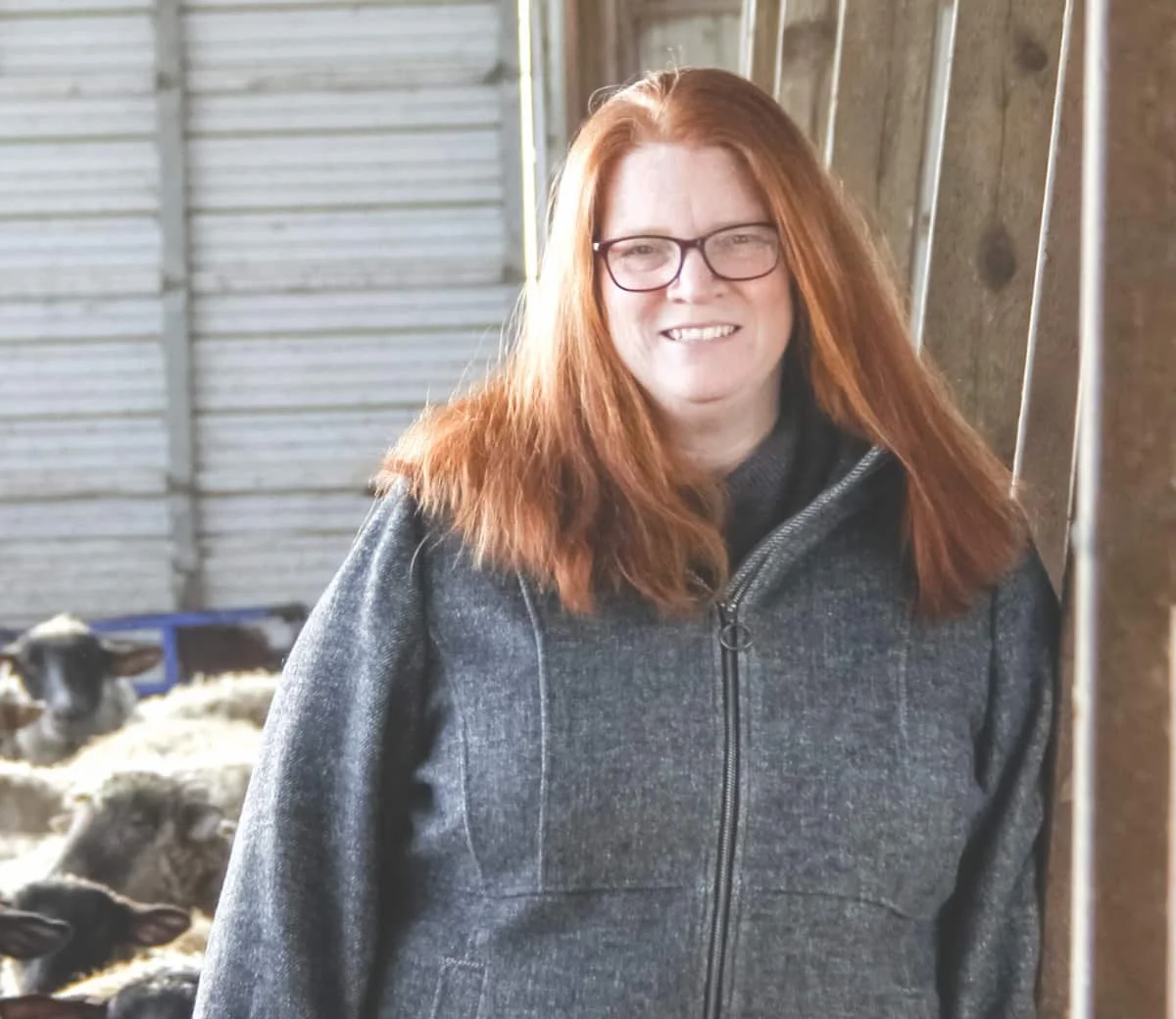
Lauren Van Ewyk is the co-founder and CEO of the National Farmer Mental Health Alliance. She says there are a number of factors that make farm women more prone to intimate partner violence. Photo courtesy of Lauren Van Ewyk
Van Ewyk, a registered social worker and agricultural mental health advocate who raises sheep with her husband in southwestern Ontario, says the close-knit nature of rural life can mask abuse.
“Certainly, there are a number of situations that make us more prone to intimate partner violence. For instance, in our rural communities, how many of us lock our doors?” she says.
“You know, it’s possible to have what looks like a great farm life, but there’s a lot of movement that can go on apart from that farm life being seen.”
Intimate partner violence refers to abusive behaviour by a partner in a romantic relationship. According to national data, eight out of 10 victims are women and girls.
The issue is not limited to rural communities. The World Health Organization has called intimate partner violence a major public health problem, and Statistics Canada reports incidents have been rising in recent years.
However, rural areas in Canada experience significantly higher rates than urban centres.
A 2022 report from the Canadian Centre for Justice and Community Safety Statistics found the rate of reported intimate partner violence against women was 461 per 100,000 people in urban areas. In rural communities, the rate was 985 per 100,000.
Those numbers are troubling on their own. Considering many incidents go unreported, the situation may be even more serious.
“I think part of it is because we have normalized it, in a sense,” Van Ewyk says.
“Part of it is based on our traditionalism in agriculture, which is to be celebrated. There is nothing wrong with some of our traditionalism. It’s part of who we are.
“But we have normalized some of the actions that go on. Farmers are typically more of peacemakers than we need to be when it comes to issues such as intimate partner violence.”
Van Ewyk says the same agricultural traditionalism can also contribute to women’s roles on farms being overlooked or undervalued.
According to the Canadian Census of Agriculture, women account for 30.4 per cent of farm operators in Canada. Despite that, their contributions are not always recognized, particularly when family farms face separation or divorce.
“Particularly when it comes to things like divorce or separation, we have situations where women’s sweat labour on farms is not accounted for,” she says.
“You almost have to have a forensic accountant go through to really appreciate how women have contributed to the success of farms.”
Isolation can also increase vulnerability. Distance from services can make it difficult to seek help, while emotional isolation can be used as a form of control.
“The very fact that in some cases we have tremendously large farms, especially in our Prairie provinces, that physical isolation makes it harder to reach out for supports or to access services,” Van Ewyk says.
“Emotional isolation is when women are cut off from friends and family.
“When we see evidence of narcissism on the farm, which is a form of control, we see that control exhibited over women where they don’t have their own financial means or they have allowances.”
Leaving an abusive relationship can be especially difficult in rural communities, she adds. Beyond isolation and limited services, many victims do not want to abandon the lifestyle they love.
“There’s the isolation, the lack of privacy, there are legal issues, but by and large one of the biggest things that we’re asking them to do is to give up the things they love in order to be safe,” Van Ewyk says.
However, she says support services must understand agriculture and farm culture.
“This is one of the reasons we’re so passionate about agriculture-informed therapy at the National Farmer Mental Health Alliance,” she says.
“If a rural woman goes in for counselling or accesses services, unless you understand some of the culture and warning signs, you will miss it.”
She says rural communities also need to speak up when they suspect abuse.
“We need more guardians, more advocates, more people who are willing to say, ‘Hey, I noticed this.’ Most often people suspect it and they don’t say anything until after the fact,” she says.
Despite the challenges, Van Ewyk says the agricultural industry has become more willing to discuss difficult topics such as mental health, suicide and intimate partner violence.
That shift, she says, could help save lives.
“The reality is that we need to speak for women who can’t speak for themselves.”
More information about the National Farmer Mental Health Alliance is available at www.nfmha.ca. Support is available by calling 1-877-639-8828 or emailing info@nfmha.ca.