
AG OPINION: On shooting messengers and wild pigs
By Sheri Monk
It’s been a year since our last agricultural feature – and what a year it’s been. The cattle industry is on fire – in the good way this time. Unfortunately, so are many places in the world, including Ukraine and Iran. Last year at this time, Elon Musk appeared to be running the White House. Now, we never hear about him or his Cybertrucks. (I have yet to see a rural Cyber Truck being used for actual work, but I know they’re out there.)

Sheri Monk
The war in Iran comes right before seeding, and this has made the price of fertilizer skyrocket, along with the price of diesel and crude. The Middle East is a major fertilizer and fertilizer feedstock supplier, accounting for 30 per cent of the world’s exports. Some analysts are predicting lower yields, fewer acres planted and reduced global crop supply as a result of these pressures.
Of course, two years ago, market experts were predicting grain shortages because of the war in Ukraine and production actually went in the other direction. Agricultural economics seem to be a lot like the weather – hard to predict, fun to talk about, but reliably not what we need at the time we need it. (Unless you know a cow-calf producer, but many won’t admit it anyway.)
I was travelling up north for work recently, and when I settled into my room I landed on CPAC, the channel that covers Parliament and all of the Senate committee meetings. It just happened that it was airing the Jan. 27 meeting of the Standing Committee on Agriculture and Agri-Food. The topic was reference prices in the beef and pork supply chain. For a long time, price discovery has been a bone of contention within the Canadian industry, and over the past 20 years, I’ve seen more and more support for the discovery side – from all sectors.
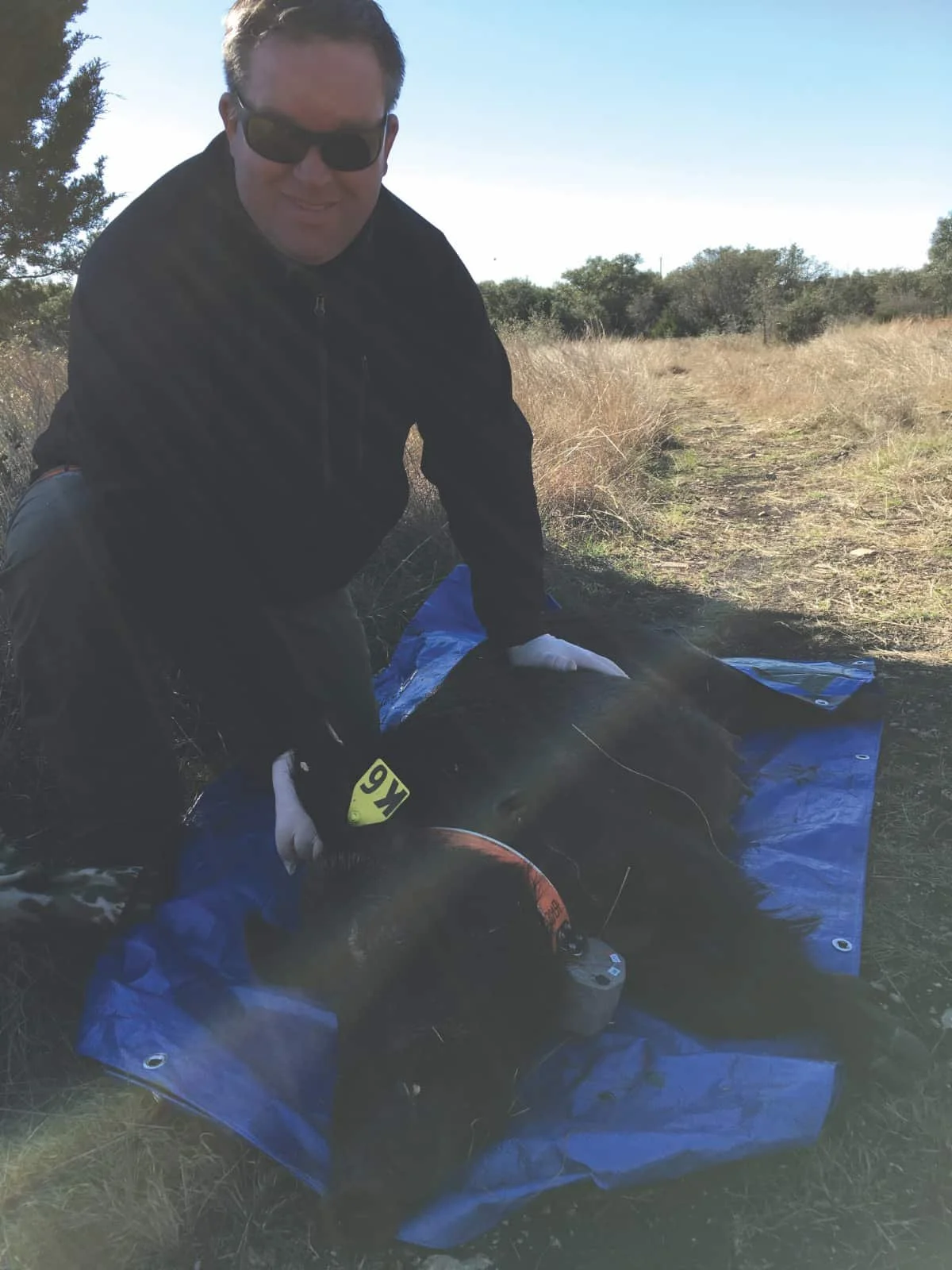
Dr. Ryan Brook has 19 published papers about wild pigs in Canada.
Watching the committee meeting also made me realize something else – not all of the committee members know a whole lot about agriculture. Even though I only contribute annually now to agriculture journalism, I think about it all the time. And when it’s time for this section every year, I fall back into it seamlessly. I miss it – especially the cattle and beef sectors. It makes me think there must be some way I can contribute, be it through board representation, junior journalist mentoring – something! Who knows, maybe Parliament isn’t out of the question one day. Representation is important, and meaningful collaboration is more important than ever.
I was encouraged to find that specified risk material (SRM) removal is on its way out. A few years ago, I was commissioned to write a report about an arm of the cattle industry, and it became clear to me then that all players in the supply chain were ready to see it go. And it made sense – we had just had our BSE risk changed to negligible. In the Canadian cattle industry, it is imperative that we are as competitive as possible with the U.S. given the constant north-south trade axis.
However, it’s even more critical to be keenly competitive when we are actually competing for export markets. The push to diversify has been shared so often for so long that I think many of us have stopped hearing it. Nonetheless, there is a concerted push now and the agricultural industry is wise to heed it – without sacrificing the crucial trade relationships we’ve always known.
The wild pig issue continues to haunt me when I am trying to fall asleep. We know our prairie song bird population is down by 60 per cent. Even the famously prolific western meadowlark numbers are down significantly. The return of their song to the landscape every spring is synonymous with hope, growth and green grass. It’s special. It is the anthem of the prairies – and it’s becoming quieter each year.
Wild pigs are an ecological threat that could irremovably change the landscape forever. It’s another pressure within one of the most endangered ecosystems on the planet. And no one in Saskatchewan seems to care about any impact other than crop damage. Perhaps this is because the Saskatchewan government continues to allow the Saskatchewan Crop Insurance Corporation to handle the file. Why the Saskatchewan Ministry of Environment (under which wildlife, conservation and habitat responsibilities fall) wouldn’t be involved is mind boggling. When reasonable detailed questions are posed and not answered, and when no one from the corporation will make themselves available, someone needs to call attention to those red flags.
When the Saskatchewan Party defeated the NDP to be elected in 2007, I spoke with Premier Brad Wall that very night. His government was responsive, flexible and approachable. It was open-minded, collaborative and it was exactly what the province needed after being saddled to a stiff and unaccountable NDP government for so long. I think it’s time the Saskatchewan government recognizes and corrects course from becoming a stagnant government, and if those traits exist in their Crown corporation entities, they need to hire a housekeeper and clean that messy house.
Why Saskatchewan and Manitoba seem reluctant to use Dr. Ryan Brook’s data, experience and expertise is baffling. He is widely respected by other wild pig researchers and by other governments, including those in the United States. Significant portions of his funding have in fact been provided by the United States Department of Agriculture because they recognize the threat of our pigs invading the border into their northern states – which are currently pig-free. I guess the phrase “don’t shoot the messenger” originated for a reason. We would be well-advised to listen.