
High insect pest pressure reported across Saskatchewan in 2025
By Ian MacKay
Workers found significant levels of grasshoppers in west-central Saskatchewan and strong populations of bertha armyworm moths and cabbage seedpod weevils in much of the province last year.
“High insect pest pressure” was among the challenges Saskatchewan farmers faced during the 2025 growing season, according to an article in Agriview, the quarterly online publication of the Saskatchewan Ministry of Agriculture.
Department staff conducted several insect surveys in 2025, with populations varying significantly depending on the species surveyed. Results from some laboratory work had not yet been completed at the time of publication.
Large populations of bertha armyworm moths were reported in many parts of the province, including areas not affected in 2024 or previous years. Canola and mustard growers are advised to be particularly vigilant with scouting in 2026 in regions where high populations were observed.
Some locations in west-central Saskatchewan, including north-central Mountain View and the south-central Rural Municipality of Biggar, recorded more than 1,200 moths. The insects overwinter as pupae below the soil surface and emerge as moths in the spring.
“Emergence is highly dependent on temperature,” the report said.
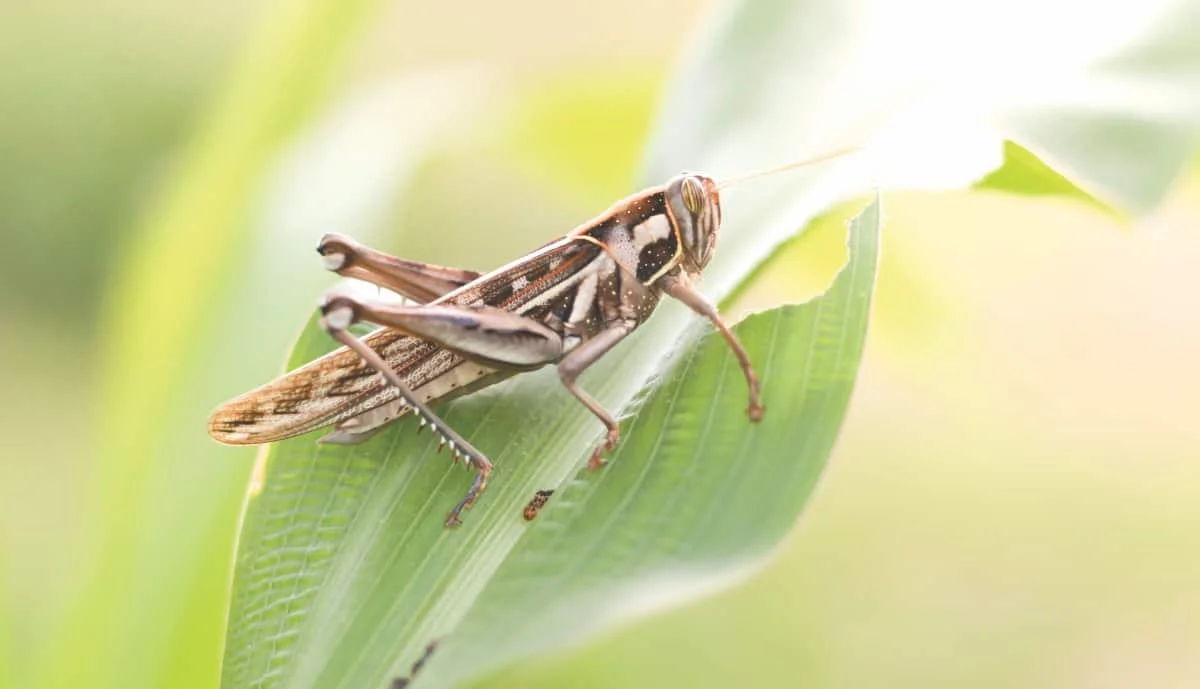
Grasshopper numbers declined significantly in 2025 compared to 2024 in most areas. However, surveys still showed high populations in west-central and south-central Saskatchewan.
Farmers are encouraged to monitor fields closely, as provincial maps may not reflect localized high populations.
“Many factors, including environmental conditions, will dictate grasshopper populations in 2026,” the report said.
The Regina area and parts of southwestern Saskatchewan experienced significant crop cutting by the wheat stem sawfly. In its larval stage, the insect feeds on the pith of cereal crops, reducing yield and quality.
“Eventually, the larva will cut a groove completely around the inside of the stem which causes the stem to weaken and become susceptible to lodging,” the report said.
Diamondback moth populations depend on winds carrying adults north from the United States. Pheromone traps began catching the insects early last May, with numbers increasing until late July at low to moderate levels.
The report noted that early arrival of adult moths can lead to more significant population buildup during the growing season.
Cabbage seedpod weevil surveys are conducted when canola and brown and oriental mustard are flowering. Yellow mustard is resistant to the weevil.
The 2025 survey results indicated large populations in many parts of the province, including areas not affected in previous years. Growers in regions with high populations are advised to scout carefully in 2026.
During the winter months, staff analyze soil samples collected for the wheat midge survey to determine the presence and abundance of larval cocoons and levels of parasitism by the midge’s natural enemy, Macroglenes penetrans. Totals of cocoons without parasites will be used to produce the 2025 wheat midge map, the report said.