
The Tumbleweed Tree in the Dug-Out “Home”
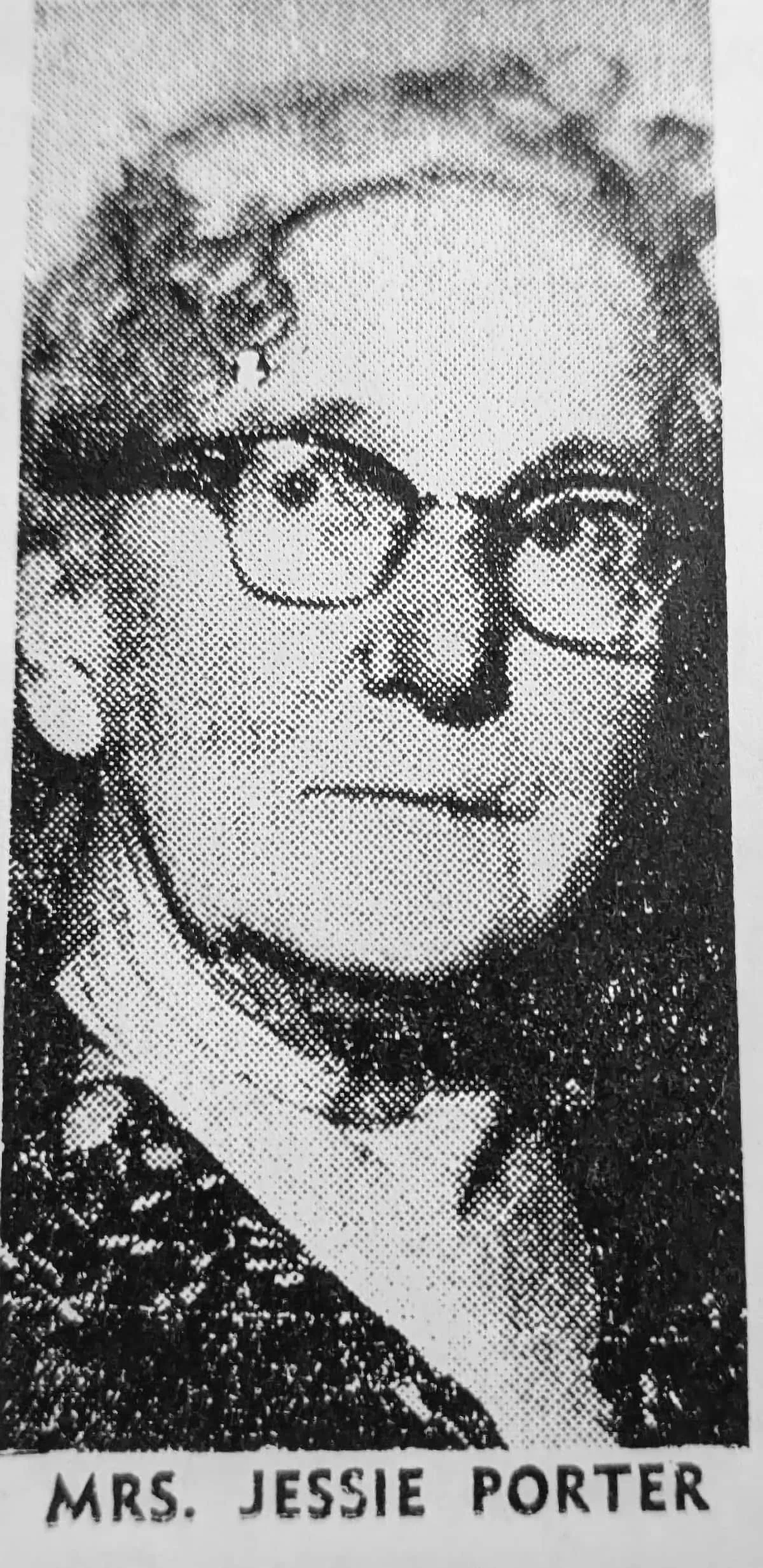
By Mrs. Jesse Porter
I learned something of courage in the face of adversity on my most memorable Christmas. It happened 42 years ago in a makeshift home dug into the side of a small hill on the prairie.
My husband and I had planned to spend the holiday quietly in our two-room home near Cereal, a village 200 miles east of Calgary. The weather had turned cold. Clouds scudded across the sky, and there was a hint of a storm in the air.
Memories of happier days in Lincolnshire, England, came flooding back. There were the large family gatherings, the plump roast goose, steamed plum puddings and strolling carollers. Even on the Christmas days that I had worked as a nurse in London hospitals, there had always been carols. But 42 years ago, there was only the lonely wind whistling across the Prairies.
The barking of our cattle dog, a big collie, interrupted our reverie. Joe Brown, one of our neighbors, had come to take me to his home, 10 miles distant – on a stoneboat.
“My wife has need of you,” he said.
As the only trained nurse in the district, I had become accustomed to calls at any time of the day or night, but even a nurse likes to spend Christmas at home. However, nothing is more important in homesteading than helping one another. And Joe did look troubled.
The nearest doctor lived 48 miles away. I packed my straw suitcase with my nursing things, bundled up in my husband’s fur coat and made ready for a bitter cold jaunt across the open prairie. There’s not much to a stoneboat, only rough planks attached to two runners. The only addition was a seat.
Although hardships were part and parcel of homesteading, the Browns were worse off than most. Newcomers in the district, they had arrived during the fall. Winter had set in early, not giving them much chance to get settled. Joe had made two dug-outs in the side of a small hill – one for the horses, a cow and a few chickens; the other for himself, his wife and small daughter. This would become the stable when they built their house in the spring.
It was to this house in a hill that we headed. With the temperatures below zero, Joe tucked a huge robe around us. We had covered only half the journey when a sudden snow squall hurled itself down from the north. The snow stung our faces. I tied my scarf over my face, and Joe pulled his cap low over his eyes. The horses plodded on through the storm.
Suddenly the stoneboat slewed into a rock. We pitched headlong into a snowdrift. Fortunately for us, the team stood by. We shook the snow off and clambered back on the stoneboat. With the storm gathering force, Joe relied more and more on the horses to find the way home.
The team shambled to a halt at dusk. I never thought a bleak hillside dug-out could look so much like a haven. The living quarters had a cozy warmth, and considering the circumstances, appeared to be quite comfortable. Joe Brown had been a cabinet maker in England. The furniture showed excellent craftsmanship. He fairly beamed when he showed the little cradle he had built that morning. It contained a tiny straw tick and downy blankets.
Sarah Brown was apologetic:
“We feel badly about bringing you from home,” she murmured. “But I am glad you could come. The doctor seems so far away.”
The young couple already had one child, a wee girl sleeping on a cot. My eyes blurred at the sight of an empty white stocking pinned to the end of her pillow. It was Christmas Eve.
“How about a tree?” I asked, even though I knew there wasn’t a tree for miles. Sarah Brown reached behind the curtains and brought out the largest tumbleweed I have ever laid eyes on.
“Our tree,” she announced with pride. Soon, the three of us were busy with the trimming. We set the tumbleweed in the centre of the table, popped corn over red coals, strung it and hung loops on curving branches. Silver paper from a box of biscuits was fashioned into an angel holding a star. This was wired to the top, and beneath it, my red glass beads sparkled in the light from the kerosene lamp.
Who would have thought a Russian thistle could look so lovely? The excitement of Christmas crept into the home. Next, we tackled the white stocking. We filled it with a little doll fashioned from colored yarn, some sweets and a hair ribbon. Joe pulled out a home-made red sleigh from under the bed.
At last, the young mother-to-be could keep her eyes open no longer. I also decided to get some rest. At two o’clock in the morning, Joe was up, rattling the stove grate, putting more coal into the stove and filling the tea kettle.
Sarah Brown obviously felt deep pain, but she handled it well. Her husband didn’t. Lines of worry creased his face. I resolved to keep him as busy as I could so he wouldn’t have too much time to think about what lay ahead.
It was nearly morning before I was able to utter the words every father yearns to hear: “It’s a boy.”
The baby gave its first, lusty cry. Sarah managed a faint smile of gratitude. Her pleased husband spent what little remained of the night rocking his newborn son with the “red face and the blue, blue eyes.”
There was a beautiful sunrise that morning. The storm had blown over. Fresh snow blanketed the prairie. Later, we heard the approach of a bob-sleigh. My husband had driven over to see if we were all right. My happiness was complete.
I am 79 years of age now. But whenever I see tumbleweed, I remember a Christmas of long ago and the Browns who, eking out a bare existence from a new homestead, welcomed the birth of a son with joy and courage and faith in the future.
This was taken from the book “Down Cereal’s Memory Trails” History Book (1910-1967).
Submitted by Bernadine Coates-Perreault
As I read through the heartwarming story shared by Mrs. Jesse Porter, I couldn’t help but think of the struggles and courage displayed by my own grandmother when she first arrived here from England. Her journey, like that of so many early settlers, was filled with hardship and perseverance. It’s humbling to remember the sacrifices and resilience of these homesteaders as they built lives from the harsh, unforgiving land.
The tale of Christmas spent in a dugout home with a tumbleweed tree is a powerful reminder of how far people went to find joy, even in the most challenging of circumstances. It’s a lesson worth remembering, especially in these trying times, when we can draw strength from the same spirit of courage and community that helped our ancestors endure.