
Special Areas Advisory Council wraps up 2025 focusing on healthcare, roads and water projects
HANNA — The Special Areas Advisory Council concluded its final meeting of 2025 with a focus on healthcare, road construction, irrigation, and waste management, setting priorities for the year ahead.
The three-day session in Hanna opened with Chair Shaune Kovitch recognizing long-time member Neal Roes, who represented Special Areas No. 2 – Subdivision 2 for 12 years. Roes received a plaque of appreciation; Rod Moench was elected to the subdivision in October’s municipal election.
The council also announced senior management changes. Jordon Christianson has taken on a new two-year role as Director of Regional Initiatives, working with Alberta Municipal Affairs to provide strategic advice on healthcare, irrigation, and economic development in the region.
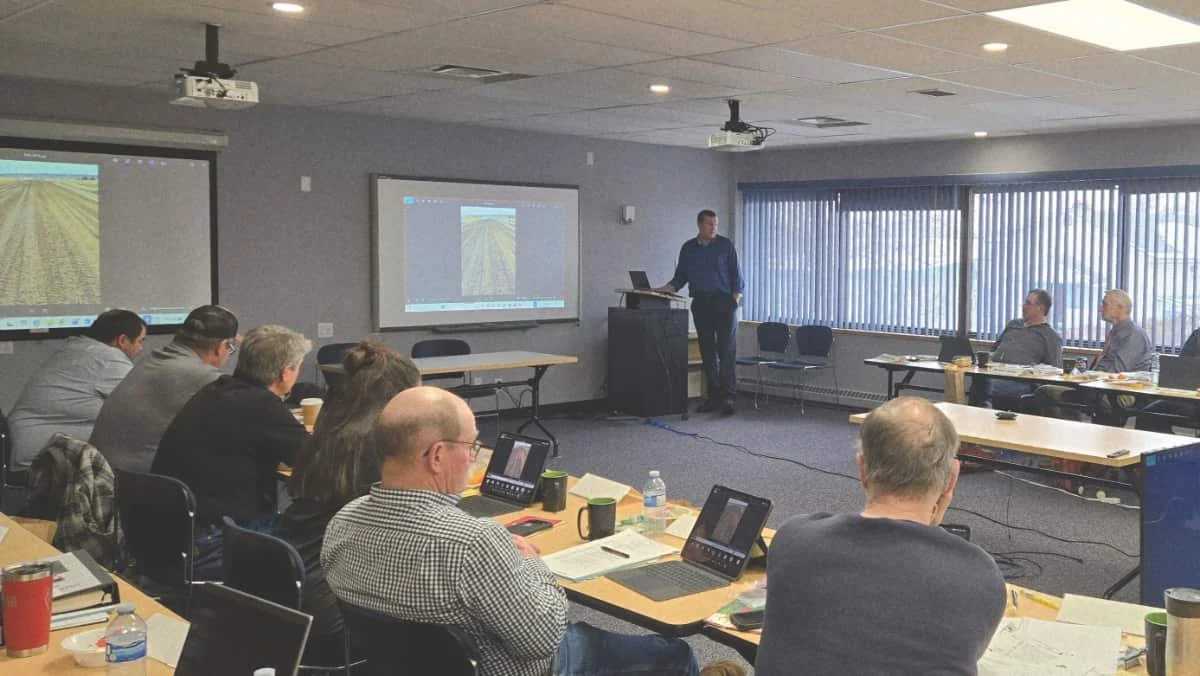
Brent Fecho, Superintendent of Roads & Equipment, presents the proposed 2026 road plan.
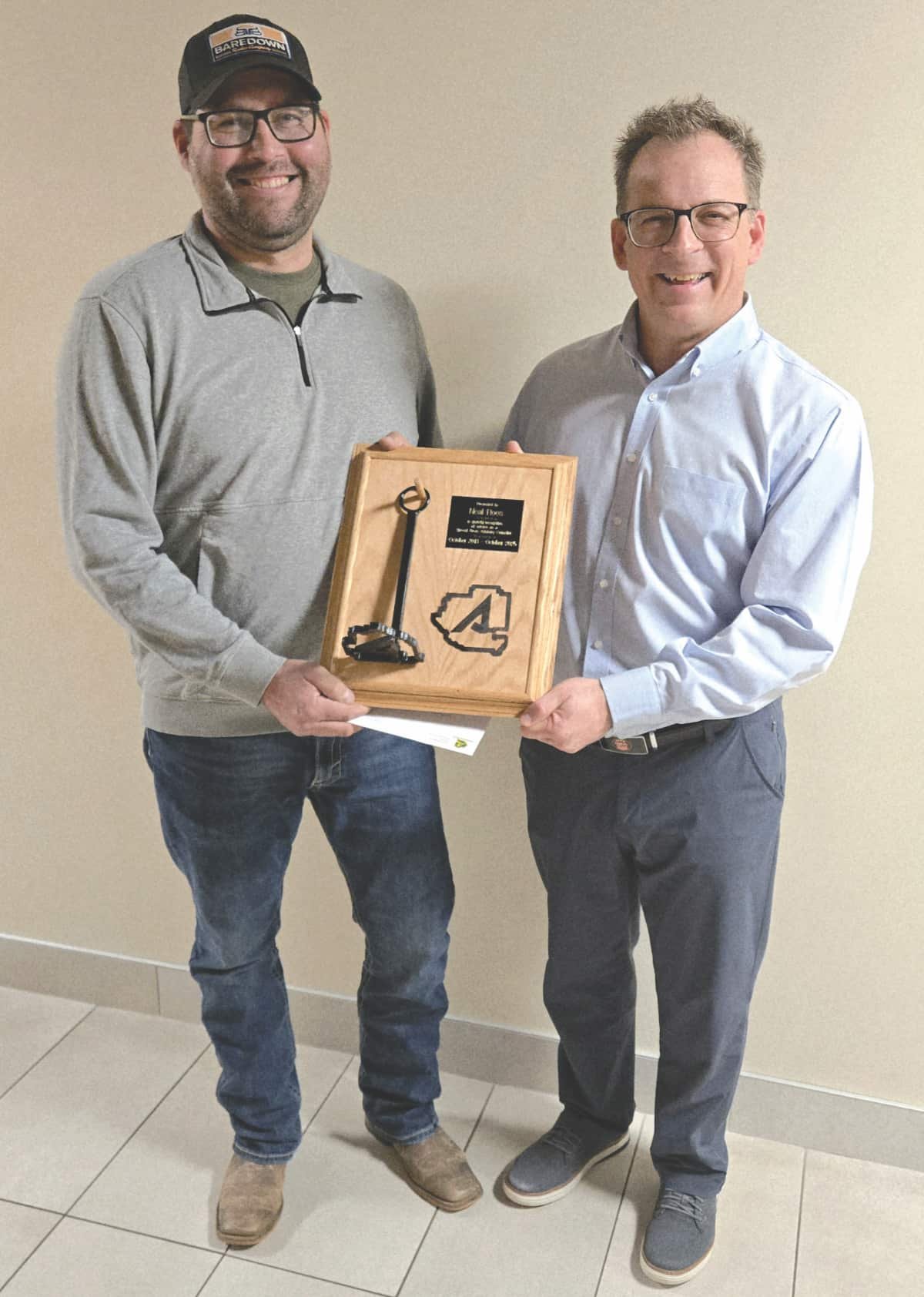
Chair Shaune Kovitch (right) presents a plaque to Neal Roes, former Advisory Councillor for SA2-SD2.
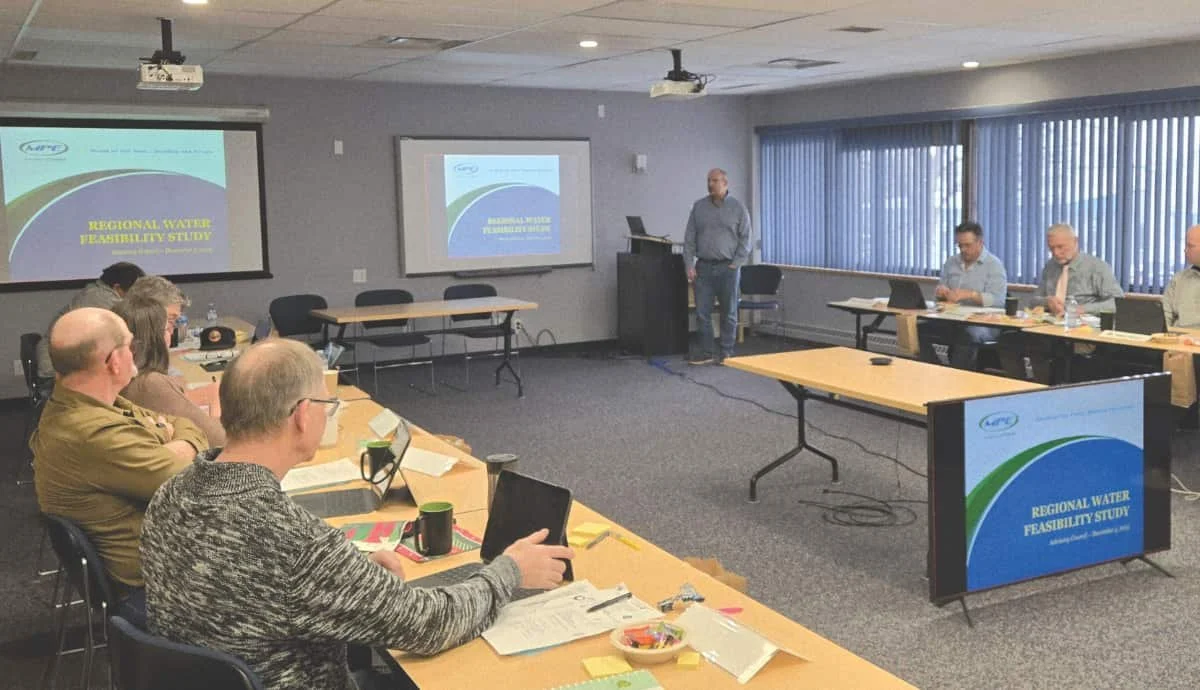
Colin McNab from MPE Engineering shares findings on regional waterline extension feasibility work.
Community Input Guides Decisions
Advisory Council members reviewed motions from annual ratepayer meetings, including requests for investment in water infrastructure and concerns about hamlet services. Local producers highlighted rising coyote predation and the unavailability of strychnine for pest control.
The council also reviewed results from its first Resident Satisfaction Survey, conducted in summer 2025. While the response rate was modest, the survey provided insights on services, taxes, and quality of life that will guide future planning.
Healthcare Investments
Rural healthcare was a major focus, with representatives from medical centres in Hanna, Consort, and Oyen outlining challenges in delivering services to remote communities. The council directed funds in the 2026 budget to support recruitment and retention of physicians and healthcare workers. The three medical boards will continue coordinating regional strategies, with Christianson’s new role expected to play a key part.
Roads and Transportation
The council reviewed the proposed 2026 road program, which includes more than 26 kilometres of surfacing, 37 kilometres of recrowning, and 24 kilometres of new construction. Deferred projects from 2025 will also be completed.
Alberta Transportation and Economic Corridors representatives attended to discuss highway maintenance and upcoming projects. Council members requested paving on Highways 899 and 886 and raised safety concerns near the Dorothy Elevator, where visitors frequently stop for photos, suggesting signage and a turnout area.
Irrigation and Water Projects
Christianson reported on a regional irrigation project with the MD of Acadia, Canada Infrastructure Bank, and Alberta Agriculture and Irrigation. Phase 2 is complete, and discussions are underway to create a municipally controlled corporation to oversee future work.
Water infrastructure was a key topic, with residents calling for expanded storage and rural waterlines. MPE Engineering presented findings from spring engagement sessions, showing strong support but concerns about costs. Council directed further consultation, project development, and grant exploration.
Waste Management, Land Sales and Technology
The Big Country Waste Management Commission updated council on waste transfer stations, noting repair costs and the need for public engagement on potential service changes.
The council welcomed Dr. Cassidy Rankine from Planet Labs Geomatics to discuss a pilot project using satellite data to monitor vegetation health across 50,000 acres, supporting drought management and rangeland planning.
Trent Caskey, Director of Property Administration, reported on the 2023 Tax Recovery Land Sale policy, noting more than 280 applications to date. Leaseholders have until July 16, 2026, to apply, and council requested information be shared at future ratepayer meetings.
Financial Statements and Budget
Director of Finance & Administration Darren Jones presented 2025 interim financial statements and the proposed 2026 budget, emphasizing investments in healthcare, roads, and water infrastructure. Funding will also increase for hamlet services and cemeteries. Fees for camping, water services, cemetery plots, and development permits will rise in January 2026.
The council will reconvene in spring 2026, while the Special Areas Board continues to meet twice a month.