
Pop 89: Ashes & Snow Part 1
By Madonna Hamel
I planned to attend Ash Wednesday services in Ponteix; I even plugged in my car the night before. I like everything about Ash Wednesday and the season it leads us into. (And no, despite the lazy language of blogsters, we do not “kick off” Lent like it’s some kind of sporting event or New Year’s bash.) I welcome the ritual of the “imposition” of ashes on my forehead as a reminder of my mortality. Death could, I suppose, be considered the biggest “imposition” of all, second only to being born into this crazy world.
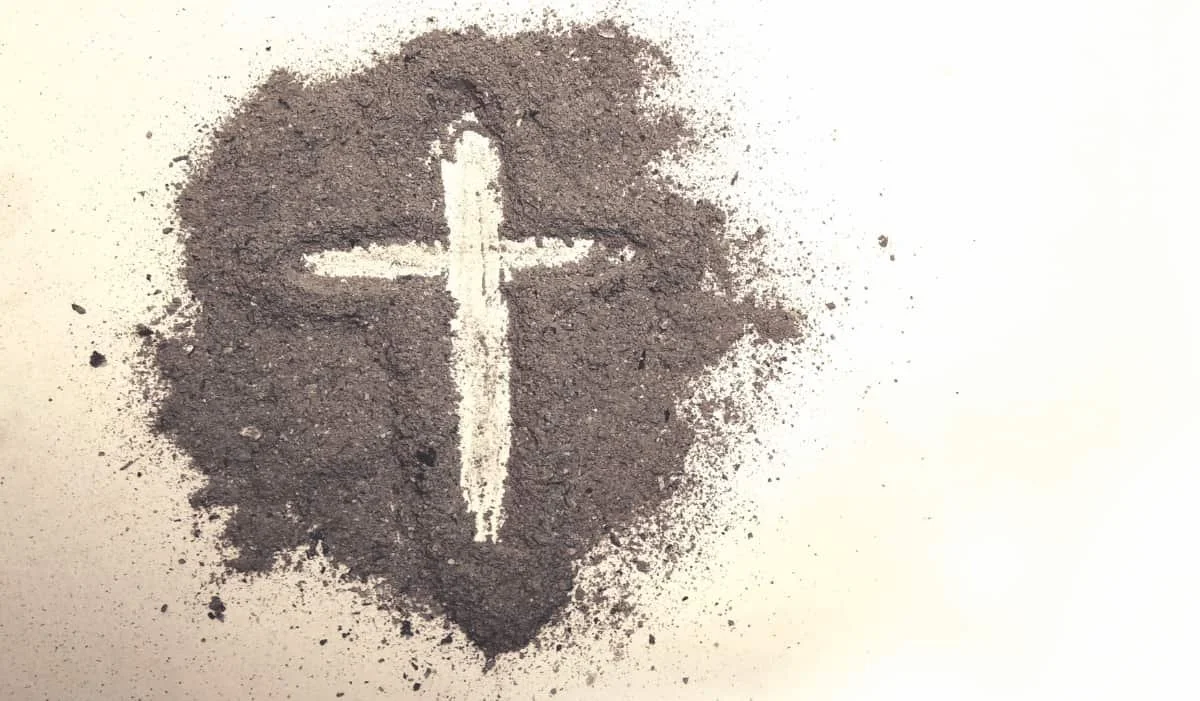
Back in 2013, when I lived with my dad after my mom died, I did a series of radio pieces on the various faith practices in Southwestern B.C. One of the most memorable was with Fr. Pat, a parish priest. Fr. Pat had a way with words and an instinct for spotting troubled souls. He once told me, “My dad warned me: Pat, you’re either gonna be a priest or go to jail.”
That year, the weekend before Ash Wednesday, we squatted over his hibachi and burned the previous year’s Palm Sunday palms. “It’s how we get the Ash Wednesday ashes, which are called sacramentals,” he explained. Sacramentals are objects or actions — like rosaries or blessings — meant to help prepare the heart to receive grace and support the spirit.
This year, as the temperature began to plummet to a below-thirty windchill, I decided to “attend” Ash Wednesday online. I watched Pope Leo walk the narrow road to the medieval church of St. Sabine, bathed in the golden light of a Roman late afternoon, accompanied by the litany of saints recited by the Sistine Choir. I joined the voices of bystanders and accompanying deacons in a responsorial song: “Ora Pro Nobis,” which is “Pray for Us” in Latin.
Hours earlier, in Newark, NJ, Cardinal Joseph Tobin entered the Delaney Hall ICE detention facility to apply ashes to detainees. “It’s important to be part of this place, out of respect for the dignity of those women and men,” he said. “Their faith is a way of looking at life that sees more than meets the eye. It’s part of who they are.” He sadly noted that there seems to be “a steady decline in behaving humanely in the world.”
In Chicago, Cardinal Blaise Cupich, standing in the cold with immigrants, consoled them with these words: “God does not need papers to know who or where you are. The world may look at your legal status, but God looks at your heart.”
“This is a day for those who are made to feel like dust that can be swept away or treated as if they do not belong,” he said. “It is a day for those who work with the dust of the earth in construction, in cleaning, in harvesting the crops of the fields, all to support their families. Yet remember, from the beginning, it is dust that God uses to create humanity.”
Dust, dirt, grit and grime. We are, as humans, often immersed in it, especially around here, where farmers and ranchers get into the thick of it — be it gumbo, machinery grease or cow pies.
Some people may think that folks who walk around after services with a smudge in the shape of a cross on their forehead are just “virtue signalling” or, as the Black folks in Memphis would call it, “signifying.” But it’s meant to be humbling. It reminds us that smudges, stains, rips and tears in clothing are the stuff of life. Whether you’re an artist (I have my share of burn holes in clothing from welding, torch-cutting and brazing sculptures), or a labourer. Or a mom.
As I write this, I’m gazing upon the small urn that holds my mother’s ashes. She died suddenly of a stroke, preparing for an Easter concert. In fact, she was doing the same when she went into labour with me on Holy Thursday in 1958. I was born on Good Friday. The Paschal Mystery is woven, like one of those bright Easter baskets we received as kids, throughout my life, sometimes appearing on the calendar as if out of the blue. But lately, it’s much anticipated as one of the few “blueprints” for the human journey from life to death that never fails to inspire.
I vaguely remember asking the kind-hearted funeral director if, instead of putting Mom’s ashes in one large urn, we could divvy her up, as it were, into seven smaller ones — one for each of us. He said there was such an option, and after her cremation, we each received a small, delicate pewter urn. The director neglected to remove the “Made in India” sticker on the bottom of the little urns, so I wrote “Made in Val Marie” on a piece of masking tape and attached it instead.
The idea of separating Mom’s ashes into personal packages reminded me of the scene in Romeo and Juliet where Juliet weeps: “When he shall die, take him and cut him out in little stars. And he will make the face of heaven so fine that all the world will be in love with night. And pay no worship to the garish sun.” I hated that soliloquy. It made no sense. Just look at the sky and skip the butchering, I thought. Still, I wanted my own urn.
I learned later that divvying up ashes, as well as scattering them in various places, was not something the church condones. These decisions seem so random and even picky. But who am I to judge? Lent is also a time of fasting. Most people think that means giving up sweets and large portions and doing without the luxuries and gluttonies we made sure to fill up on the night before at Mardi Gras and the feasts of Fat Tuesday. But Pope Leo reminds us that it’s about “fasting from harsh words and rash judgements as well.” So I’ll do my best.